From Freelancer to Agency: Why Pricing (and Letting Go) Changed Everything for Jade Hallam
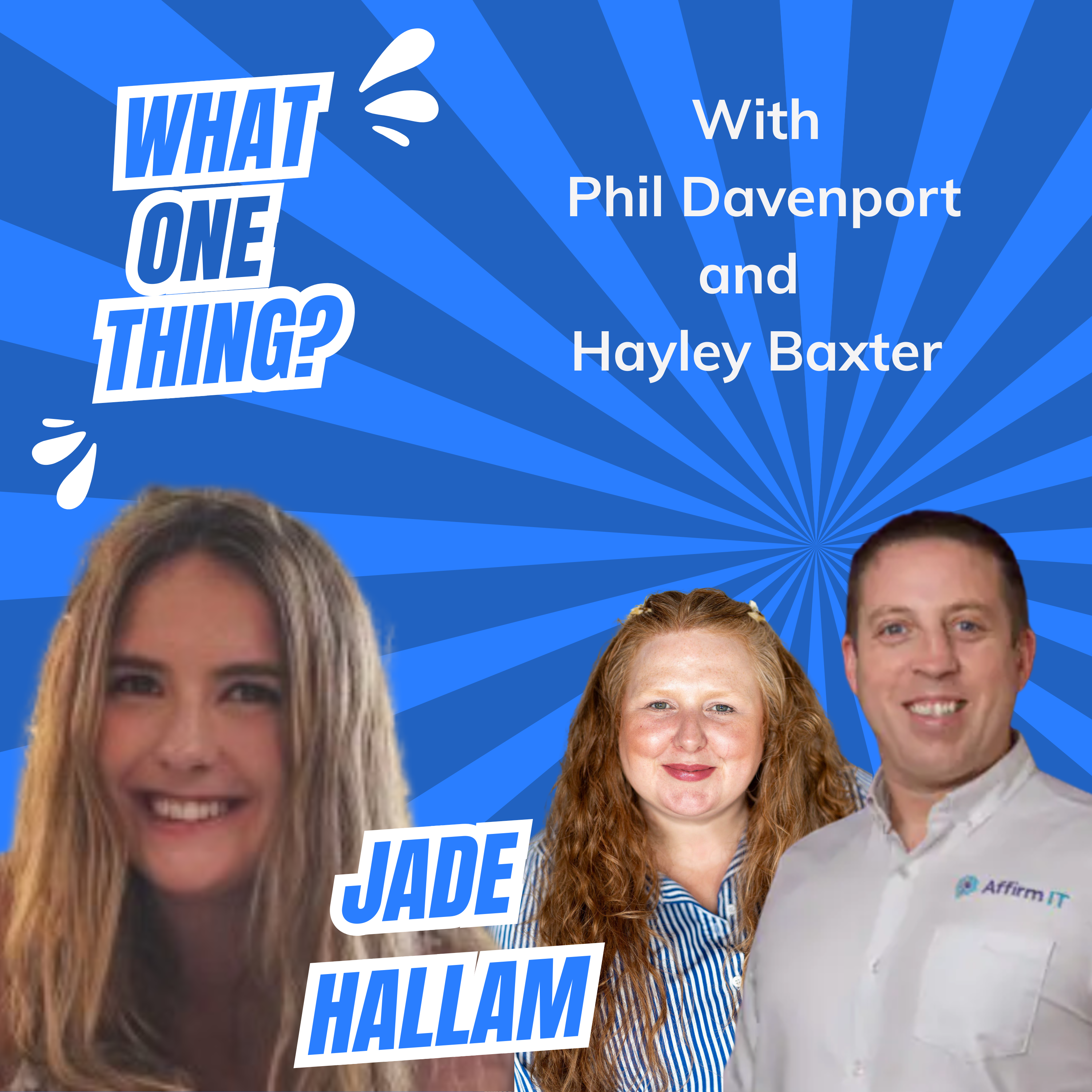
In this episode of the What One Thing podcast, Phil Davenport (Affirm IT Services) and Hayley Baxter (Corbar Accounting) chat with Jade Hallam, founder of Clever Clicks, a Nottingham-based digital marketing agency specialising in SEO and B2B marketing.
Jade’s story will sound very familiar to a lot of business owners:
Started out freelancing
Said “yes” to most things
Wore every hat in the business
Then hit the point where winging it stopped being enough
What’s really powerful is how honest she is about the bits most people gloss over – especially pricing, letting go of control, and trying to market marketing in a crowded space.
1. From “I’ll Just Try Freelancing” to “Let’s Build an Agency”
Jade didn’t step out of college with a perfectly formed plan.
She left at 17 with no idea what she wanted to do, found a digital marketing apprenticeship, and then fell in love with SEO after working with a great manager who really invested in her development. That “spark” turned into several roles in agencies, then freelance work on the side… until life gave her a nudge.
“In 2018, I got pregnant with my son and I thought, if I’m ever going to do it, now’s the time.”
At four months pregnant, she quit her job and went all in on freelancing.
Her partner already had a landscaping business and could cover the bills, so the first phase was:
Kids to childcare
Then work flat out to bring in clients
Lean heavily on her network and results
A lot of her early work came through her partner saying to customers:
“You could really do with some marketing”
…and handing them Jade’s details.
Hayley sees this pattern a lot:
“So many people start a business almost as an experiment – ‘let’s see if this works’ – and before you know it, it’s a full-time thing… just without the structure.”
Phil sees the same in IT – someone “has a go” at building something, then suddenly they’ve got a business… and a backlog.
Takeaway for business owners:
You don’t need a perfect five-year plan to start. But once the work is there and consistent, you do need to decide: Am I staying as a solo, or am I building a business?
Jade hit that point during and after COVID, when demand went through the roof and she realised she was turning away work. That’s when Clever Clicks was born in 2022 – and she hired her first full-time employee in the same month.
2. Stop Wearing Every Hat (Even If You’re Good at It)
As a freelancer, Jade was:
The SEO specialist
The account manager
The marketer
The person doing invoices and VAT
The one dealing with tricky websites and tricky problems
Sound familiar?
“As a freelancer, I never did any self-promotion. Everything I got was word of mouth… I was the accountant, I was the marketing manager, I was the one doing the work.”
The problem? That model doesn’t scale. At some point, you become the bottleneck.
When demand exploded and clients kept coming, Jade had a choice:
Keep saying yes and burn out
Or bring people in and accept she didn’t have to control every click and every campaign
She chose the second – and admits it wasn’t easy:
“I’m a control freak – they say ‘perfectionist’ – but I don’t like letting go of things… even though I’ve hired a team of specialists who can more than deal with it.”
She now runs a team of four, supported by a trusted network of specialists, and uses tools like Teamwork to see who’s doing what, when, and what’s been delivered.
Phil recognised that shift immediately:
“You’ve gone from being the engineer to being the business owner – and those are two totally different jobs.”
Hayley sees the same tension with finance:
“You can do your own VAT and bookkeeping… but that doesn’t mean you should. The cost of you doing everything is often hidden in your stress, your time, and your missed opportunities.”
Takeaway:
The “I’ll do it all myself” energy will get you started. It won’t get you to the next level. The move from being the business to running the business usually starts with two things:
Hiring well (for values and communication, not just CV)
Putting in simple systems so you can still see what’s going on, without being in every task
3. Marketing Isn’t One-Size-Fits-All (And Jade Will Tell You If You’re in the Wrong Place)
One of the most useful parts of the conversation was when Jade talked about channels.
Everyone wants the silver bullet:
“We want to do PPC.”
“We’ve tried Facebook Ads; they don’t work.”
“LinkedIn doesn’t do anything for us.”
Jade’s response is very data-led:
“We get so many people who come to us saying, ‘We want to do PPC’ and I’m like, no you don’t. Wrong place, wrong time. This is where you actually need to be putting your money.”
She starts by asking:
Are you B2B or B2C?
Who are your decision-makers?
Where are they actually spending time – LinkedIn, Facebook, search, industry sites?
What’s the age / behaviour / typical customer journey?
Then she uses data, tests and insights to pick the channels – not guesswork.
Phil linked this to IT decisions:
“It’s the same as tech – people ask for a shiny tool because they’ve heard of it, not because it fits their process. Good advice is often telling people what not to do.”
Hayley put the financial lens on it:
“If your marketing budget is limited, where you waste it hurts just as much as where you invest it.”
Takeaway:
Before you pour money into any channel, ask:
Are our ideal customers even there?
Do we know what “good” looks like for that platform?
Have we got the skills in-house, or do we need help?
If you don’t know – that’s when working with someone like Jade’s team can save you a lot of expensive trial and error.
4. The Scary but Essential Bit: Raising Your Prices
Jade’s one thing was a big one: pricing.
Because she came from freelancing, many of her longest-standing clients were on very low, legacy rates.
“One of the first things the business consultant said to me in January was, ‘Why the heck are you offering this? Are you even profitable?’ I’d say, ‘Yeah, but they were my first customer and I don’t want them to leave…’”
Sound familiar?
She eventually accepted the truth:
Some of those retainers weren’t profitable
She was carrying too much workload for too little return
Staying “cheap” was holding the whole business back
So she raised prices.
Yes, they lost some clients.
But they also replaced them with better-fit, more profitable work.
“We’re doing the same amount of work and earning a lot more money, which has made us more profitable… and we’re still very competitive.”
Hayley couldn’t have loved that more:
“Pricing is the block for so many business owners. Once you get it right – profit, breathing space, and options appear. It’s a different business.”
Phil added:
“It’s not just the right customer – it’s the right customer at the right price. That’s when you can pay your team properly, invest in systems, and actually enjoy working with your clients.”
Takeaway:
If you’ve never reviewed your prices, you might be:
Rewarding the wrong behaviours
Filling your time with low-margin work
Subconsciously prioritising “being liked” over being sustainable
You don’t have to jump overnight – but you do have to start.
5. Word of Mouth is Earned, Not Accidental
Even now, Clever Clicks’ biggest source of new work is still word of mouth.
But it’s not luck.
They’ve chosen to:
Offer 30-day contracts (no 12-month tie-ins)
Focus on results, service and retention
Maintain a 92% retention rate (vs. typical 40–50% in the agency world)
Keep asking happy clients: “Do you know anyone else we can help?”
On top of that, this year Jade has:
Doubled down on LinkedIn
Invested in expos (with mixed but useful results)
Started building their own SEO, PPC and content presence
Entered – and won – multiple awards
All while accepting that, as she put it:
“This is probably the hardest thing to market – marketing.”
Phil pointed out:
“You’re marketing to people who also know how to market – that’s a tough crowd.”
Takeaway:
For most established small businesses, your next best clients are usually:
People who already trust you
People who already know people who trust you
And the ones quietly watching you show up consistently over time
That’s as true for IT and accounting in the East Midlands as it is for digital agencies in Nottingham.
Jade’s One Thing
When we asked Jade for her one thing to help other business owners, she didn’t hesitate for long:
“Increase your prices.”
Not just randomly and not just because “everyone’s putting theirs up” – but:
Review the data
Understand your costs and margins
Be honest about where you’re a “busy fool”
And be brave enough to let some clients go in order to build a healthier, more sustainable business
As Hayley put it:
“Once you push through the discomfort of pricing properly, it completely changes what’s possible in your business.”
And that’s exactly what What One Thing is all about – honest, practical conversations that help small business owners grow revenue, protect profit, and create a business they actually want to run.
🎧 Listen to the full episode with Jade Hallam
📲 Want more real-world lessons on IT, finance and business growth?
Follow What One Thing, Phil (Affirm IT Services) and Hayley (Corbar Accounting) on LinkedIn for weekly conversations that help you run your business better – and enjoy it more.

AI for Small Businesses: How to Use AI Without the Hype (and Without Breaking Trust)